
Green Shift: Denmark's Energy Path
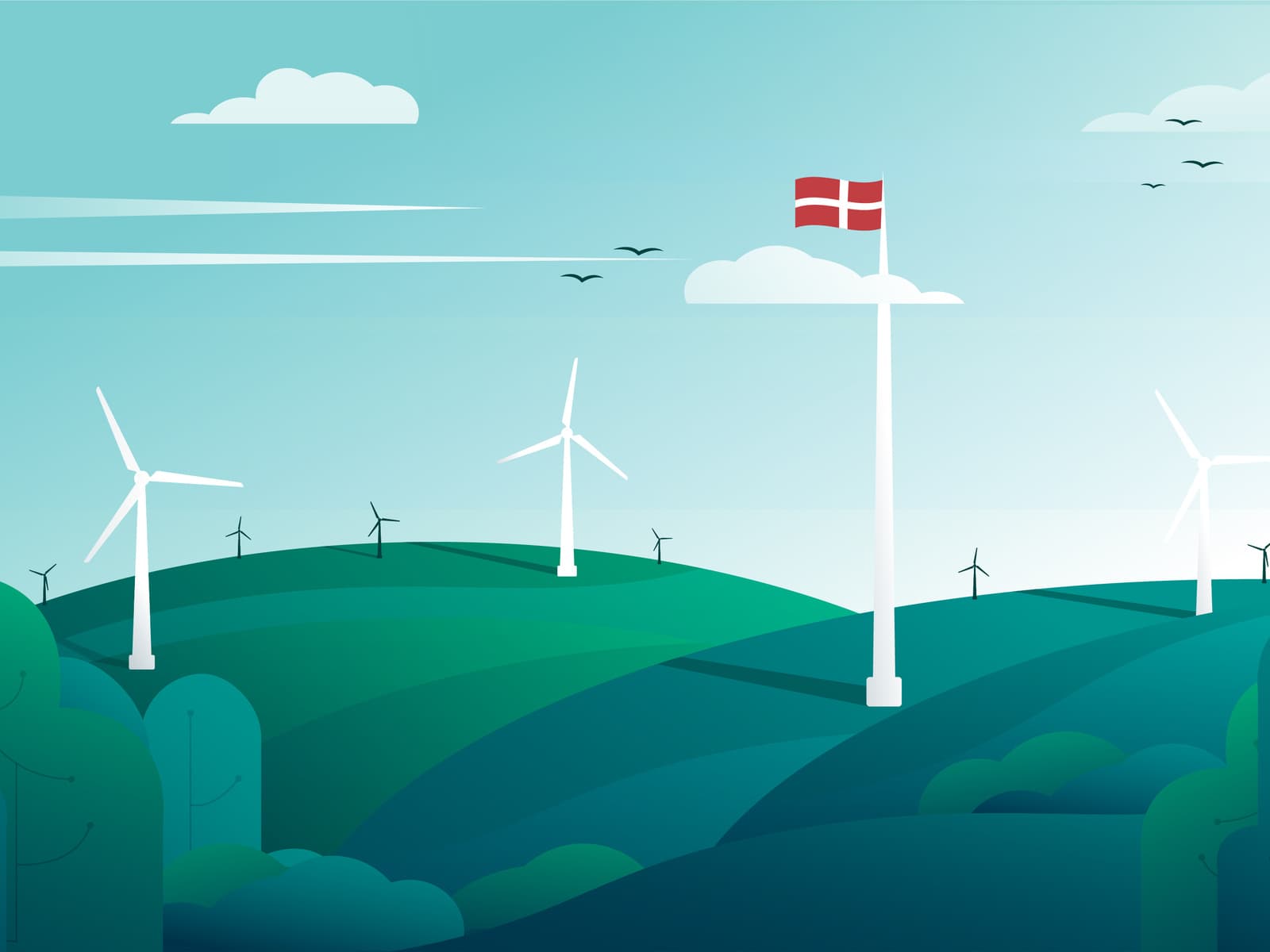
Denmark's wind power. Made by Stefan Kirkegaard on Dribbble
Leading the charge in sustainable energy
It is not uncommon to spot wind turbines gracefully spinning in the water as you take a leisurely stroll along the beaches of Denmark. Adding to this picturesque scene, a quick browse on the web for topics like "Most sustainable country in the world" invariably leads you to articles boasting about Denmark's status as the pinnacle of sustainability.
But is it truly deserving of this title? As pragmatic engineers, we feel compelled to fact-check online information. In an age saturated with fake news and deep fakes, which often sway public opinion, it's crucial to scrutinize the data meticulously.
That's where we come in. We are a group of students from the Technical University of Denmark (DTU), and we are here to investigate the veracity of these claims. We aim to provide you with a comprehensive overview of Denmark's energy landscape, exploring the country's commitment to sustainability and the impact of its policies on the environment.
Join our interactive exploration to uncover how Denmark is setting the pace for a sustainable future.
Understanding Denmark
Denmark's urban greenery. Made by Gülzade Şentürk on Dribbble
Our journey through Denmark's environmental progress examines key data: air quality improvements, reductions in greenhouse gases, and shifts in energy consumption from fossil fuels to renewables. Each point tells a story of policy success and the ongoing commitment to a sustainable future.
The air we breathe
As we navigate through the landscape of Denmark's environmental policies, our initial focus is on the air that Danes breathe every day. The foundation of our analysis is the PM10 data, a critical indicator of air quality. PM10 particles, with a diameter of less than 10 micrometers, are fine enough to bypass the body's defenses, penetrating deep into the lungs and potentially causing a range of health problems.
The data for our exploration originates from a monitoring station in Risø, which was noted for having the highest levels of air pollution across Denmark at the time of data collection. This particular station provides a stark baseline from which to measure the impact of national efforts to improve air quality.
The data speaks clearly. Despite the inherent ebbs and flows in the PM10 curve, a clear trend emerges: a significant and sustained reduction in particle concentration. This downward trajectory is not just a number on a chart; it represents a breath of fresh air for all Danes, reducing health risks and enhancing quality of life.
This improvement in air quality is a testament to Denmark's rigorous environmental policies and its commitment to sustainable practices. Each step toward cleaner air also contributes to the reduction of greenhouse gas emissions, a key metric in today's climate crisis.
As we transition from particulate pollution to greenhouse gases, it's crucial to recognize how interconnected these issues are. The strategies that help scrub the air of particulates also contribute to Denmark's efforts in curbing these harmful emissions. As we continue our exploration, we'll see how interconnected and influential these efforts are.
Cooling the climate
Another fundamental aspect of Denmark's environmental strategy is its management of greenhouse gas emissions, which serves as a critical barometer of sustainability.
Greenhouse gases, which include not only carbon dioxide but also methane, water vapor, and others, trap infrared radiation from the Earth's surface, contributing to the greenhouse effect. These emissions originate from a variety of sources, encompassing everything from agricultural practices to industrial processes. The graph we present excludes CO2 emissions from biomass, focusing instead on those emissions most directly linked to human activities.
Over the past 10 years, Denmark has shown a commendable decrease in these emissions, as illustrated in our next visualization.
The data reveals a consistent decline in overall greenhouse gas emissions. In particular, we notice how Denmark has been able to curb by about 20,000 tonnes in emissions. This success story is particularly evident in the reduction of emissions, which are significantly influenced by three main sectors: farming and agriculture, fossil fuels, and waste management. Each sector has seen targeted interventions aimed at reducing its carbon footprint.
Turning our attention to CO2, one of the most relevant greenhouse gases, over 90% of these emissions stem from the combustion of fossil fuels. This direct link underscores the importance of transitioning away from fossil fuels to alternative energy sources, a strategy that Denmark has been aggressively pursuing.
To further understand the impact of these changes, our next step will be to examine Denmark's consumption of fossil fuels over a similar period of time. This analysis will help us connect the dots between reduced fossil fuel usage and the trends observed in greenhouse gas emissions.
Fueling the future
Over the past two decades, Denmark has dramatically reshaped its energy framework, substantially reducing its dependence on fossil fuels. This significant change is captured vividly in our next visualization.
This comparative graph clearly shows how Denmark has almost halved fossil fuel share over the past 20 years. Impressively, even as Denmark's reliance on fossil fuels diminishes, we also observe a marked decrease in overall energy usage shrinking by around 40 TWh. This means that fossil fuel combustion has decreased even in absolute terms, as evidenced not only by its reduced share, but also by the overall decline in primary energy consumption. This points to successful efficiency improvements in sectors like housing and manufacturing, where modern technologies have led to less energy consumption without sacrificing productivity or comfort.
Furthermore, these trends offer insights into the declining greenhouse gas emissions we discussed earlier. The strong link between reduced fossil fuel usage and lower emissions is undeniable, and while it's not the sole factor, it's clear that this shift has played a crucial role in Denmark's environmental progress.
As we transition from the tale of fossil fuels to the broader canvas of energy sources, it's essential to explore how both renewable and non-renewable energies are integrated into Denmark's power grid. Next, we will delve into the comprehensive mix of energy sources fueling Denmark today.
Powering the nation
Our focus shifts to how the country has transformed its energy mix to meet the daily needs of its citizens and economy. This evolution is crucial not just for reducing environmental impact but also for ensuring a stable, sustainable energy supply for future generations.
This interactive graph clearly delineates the shift in energy consumption patterns in Denmark. As we had previously observed, the overall energy consumption has declined, reflecting improvements in efficiency across various sectors. Fossil fuels, once the backbone of energy consumption, have seen a significant reduction—oil consumption dropped by around 50 TWh, coal by 25 TWh, and gas by 35 TWh.
In contrast, renewable energy sources have surged, now forming a substantial part of Denmark's energy portfolio. Wind energy, in particular, has become essential, comprising almost 40% of the total energy consumed.
When examining energy production, the narrative slightly shifts. While oil production has only seen a modest reduction of 8%, coal production has significantly decreased, now contributing only about 6% to the total energy production, down from 20% a decade ago.
Despite the challenges associated with storing renewable energy, due to the high costs and inefficiencies of current battery technologies, the rise in renewable production marks progress in Denmark's energy transformation.
We can only hope that Denmark continues on this path, further reducing reliance on non-renewable sources and enhancing the efficiency of renewable energy storage.
Next, we will explore how these energy policies are intertwined with Denmark's economic performance, revealing the financial implications and benefits of a sustainable energy strategy.
Energizing the economy
Understanding the performance of the Danish economy is crucial for assessing the real impacts of sustainable policies. This analysis helps dispel the myths that these policies necessarily lead to economic downturns. Many arguments against climate-sensitive policies revolve around concerns regarding the economy. Some fear that shifting towards sustainable policies involves high costs, potential job losses, and could cause an economic decline. However, as we embark on our fact-checking journey, we aim to challenge and disprove these notions.
Here, we've plotted the real percentage growth of Denmark's GDP against previous periods. Despite some fluctuations, a clear trend emerges over the last two decades—consistent economic growth. This growth period coincides with Denmark's increased investment in renewable energy, suggesting these two are positively correlated. We further explore this connection in the next visualization.
This correlation is more than a mere coincidence. It paints a powerful narrative of sustainable development and economic growth. Despite initial concerns that investing in renewable energy might hinder economic prosperity, Denmark's experience disproves this belief. As Denmark has ramped up renewable energy utilization, not only has GDP per capita soared, but sectors like clean tech and green manufacturing have thrived, clearly debunking the myth that environmental care undermines economic vitality.
To fully appreciate the scale and context of Denmark's achievements, it's essential to place them within a broader international framework. We will next explore how Denmark's performance compares with that of other European countries and globally.
Denmark beyond borders

Renewable Energy. Made by Mila Spasova on Dribbble
Our exploration expands as we assess Denmark's standing in greenhouse gas emissions and renewable energy usage against global and European benchmarks.
Rising through the ranks
From 2005 to 2022, Denmark's journey in renewable energy is a vivid tale of ascent. Initially absent from the charts, Denmark began its climb, fueled by ambitious policies and innovative technologies. As the years passed, this small nation marked its progress not just by numbers, but by leaps—moving from unlisted to a commendable 7th place among Europe's leaders in sustainability.
This rise is particularly notable when seen in the context of overall European progress. While each nation advanced, Denmark's trajectory stands out for its steepness and speed. By 2022, it outpaced many neighbors, not merely improving but transforming its energy landscape. This indicates not just higher investment rates, but more effective integration of renewable sources, setting Denmark apart in the ongoing quest for a greener future.
Contextualizing Sustainability
In assessing the progress Denmark has made in reducing greenhouse gas emissions, it becomes essential to view these efforts within a wider lens, comparing its achievements not just locally, but also against Europe and the world. A key indicator in this examination is CO2 emissions per capita, which allows for an equitable comparison across countries by accounting for population size.
In the early 2000s, Denmark's per capita emissions were significantly higher than the European and world average. However, a series of targeted investments and forward-thinking policies have elevated Denmark to a position among the European leaders in reducing per capita emissions.
While Denmark has made commendable progress in Europe, its comparison with the rest of the world tells a slightly different story. Here, Denmark gets closer but does not surpass the world average. The latter is heavily influenced by the lower emissions from third-world and developing countries. These nations typically have underdeveloped economies that contribute less to global pollution levels, providing a unique challenge in how we interpret "low emission" statistics globally.
Exploring further, the interactive map visualization of Europe reveals intriguing trends that contrast with some of Denmark's perceived advancements. When the data from this map is compared with earlier analyses, such as the race chart we showcased, an unexpected pattern emerges. Denmark, along with its Nordic neighbors, shows higher than expected per capita greenhouse gas emissions. This seems paradoxical given their robust renewable energy infrastructures and low absolute emissions figures.
This anomaly can be attributed to several factors inherent to smaller, industrialized countries like Denmark. Despite their advancements in renewable energy, these countries often have small populations, which can skew per capita calculations. Moreover, the higher standard of living and the necessity for extensive heating systems in colder climates inherently increase per capita emissions.
Upon reflecting on these insights, it becomes clear that Denmark, while on the right track, still faces significant challenges. The higher per capita emissions among Europe's renewable leaders suggest that even the most progressive countries must explore further measures to effectively reduce their environmental impact. This realization underscores the complexity of global and regional sustainability efforts and highlights the continuous need for innovative solutions tailored to the unique challenges of each country.
Forging the future
As we conclude our exploration of Denmark's transformative energy initiatives, it is evident how the country is charting a robust green path not just within its own borders but influencing the global dialogue on sustainability. From pioneering reductions in greenhouse gas emissions to leading the charge in renewable energy adoption, Denmark's journey represents a compelling blueprint for sustainable development.
While challenges remain, particularly in managing per capita emissions, we can't deny Denmark's proactive approach and its commitment to environmental innovations and policies.
Denmark's story, then, is more than just a national success; it is a beacon for the global "Green Shift" proving that the path to sustainability is both viable and vital for the future of our planet.
Discover the full analysis
Curious about how we uncover insights from data? Dive into our full analysis.

References
Who are we?

Diogo Carvalho
s233176

Davide Giuffrida
s233204
Matteo Piccagnoni
s232713